
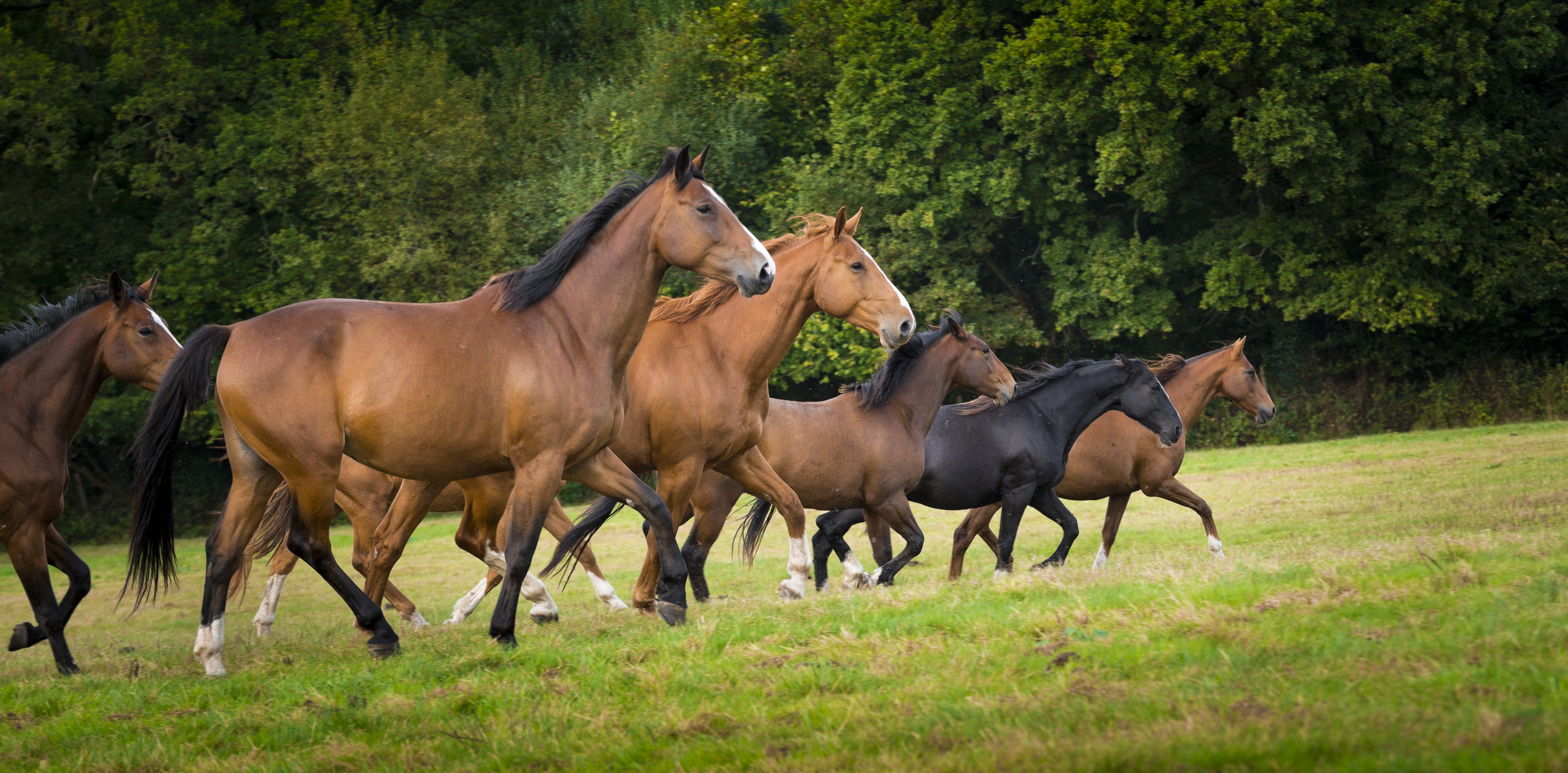
Why Horse Owners Need to Rethink Bug Season in 2026
From mosquitoes to ticks to screwworm, new forces are reshaping equine health this summer. 2026 marks a turning point.
A record-breaking El Niño weather pattern has arrived, and with it a potentially unexpected impact on horse owners. Combined with expanding tick ranges and the first U.S. New World screwworm detection since 1966, the threat for horses has changed in 2026.
The National Oceanic and Atmospheric Administration (NOAA) recently confirmed the onset of El Niño – one of the fastest developing on record, with a 90% probability of strengthening into a “super El Niño” by fall. The important issue for horse owners isn’t whether their region will get more rain but the volatility of the season’s weather. El Niño shifts bands of wet and dry weather in ways that are difficult to predict, creating ideal breeding grounds for mosquitoes that transmit West Nile virus (WNV) and eastern equine encephalitis (EEE).
“It’s the instability,” explains Maureen Long, DVM, PhD, DACVIM, professor of equine medicine at the University of Florida College of Veterinary Medicine. “Dry conditions followed by the wet create ‘the pothole effect.’ These are focal zones of standing water where mosquitoes, birds and animals all converge, creating the conditions for intense WNV and EEE transmission.”
Rather than relying on previous mosquito season trends, owners should monitor local mosquito activity and consult their veterinarian as conditions can shift quickly and in unexpected locations.
The effects of El Niño will vary by geography, but few horse country regions will be unaffected, Long warns. Here is a regional breakdown:
- Southeast: Above-average fall and winter rainfall is creating conditions for year-round mosquito activity. Fall boosters are particularly important this year, protecting not only against WNV, which peaks in fall, but against early spring EEE transmission.
- Midwest, Northeast and Mid-Atlantic: Warmer winters with less snow and more rain increase flooding risk, elevating mosquito-borne disease exposure through spring and summer. Coastal areas face heightened arbovirus risk from predicted winter rainstorms.
- California and the Southwest: El Niño effects are already established, with warmer ocean and land temperatures driving an intensive start to mosquito season, including high numbers of WNV-positive mosquito pools, dead birds and confirmed human cases.
Vaccination timing matters
WNV is now endemic throughout the United States, while EEE continues expanding beyond its historical hotspots. Protection depends on completing recommended foundational annual vaccinations and staying current on booster doses.
“Young horses need more time to establish a strong antibody response and are more susceptible to EEE,” Long notes. “Owners of horses under 5 should talk to their veterinarian about whether more frequent vaccination is appropriate, especially in the South.”
Because the window before peak mosquito season may be compressed this year, owners should review vaccination schedules with their veterinarian and consult the American Association of Equine Practitioners vaccination guidelines for WNV and EEE. Many cases occur in horses that have not completed recommended annual vaccinations or received appropriate booster doses.
Ticks continue to spread
Changing weather patterns are only part of the story. According to Erika Machtinger, PhD, associate professor of entomology at Pennsylvania State University, expanding tick populations are also being driven by changes in wildlife populations, land use and habitat. Together, these factors are allowing ticks to establish themselves in areas where horse owners have historically faced lower risk.
“Horse owners should not assume historical patterns of tick risk still apply,” Machtinger says. “Routine tick checks, vegetation management and locally appropriate veterinary prevention are becoming increasingly important.”
Earlier this spring, the CDC reported that emergency department visits for human tick bites were the highest for that point in the season since 2017, underscoring broader seasonal tick activity across many parts of the country. “Horses and humans are exposed to many of the same tick vectors, including blacklegged ticks, making it reasonable to expect that broad patterns of tick-borne disease risk may be similar,” says Toby Pinn-Woodcock, DVM, DACVIM, associate clinical professor at Cornell University College of Veterinary Medicine.
The two most common tick-borne diseases affecting horses in the U.S. are anaplasmosis and Lyme disease, both caused by pathogens transmitted by blacklegged ticks. Common clinical signs in horses with anaplasmosis include fever, lethargy, limb swelling and jaundice. Lyme disease is associated with four clinical syndromes in horses, including uveitis, neuroborreliosis, cutaneous pseudolymphoma, and nuchal bursitis (aka poll evil). Lyme disease is also frequently implicated with clinical signs of shifting leg lameness, joint swelling, back and neck pain and change in attitude, however a definitive diagnosis is challenging in these cases.
“Lyme disease in horses is considered a diagnosis of exclusion,” Pinn-Woodcock explains. “A veterinarian must first rule out other common causes of these nonspecific clinical signs and find evidence of Lyme disease exposure using an antibody detection test before concluding a Lyme diagnosis is appropriate – and many horses in endemic regions will test positive on antibody detection tests due to exposure.”
Pinn-Woodcock encourages owners in both established and newly endemic regions to remain vigilant year-round. “In the northeastern U.S., tick-borne disease is diagnosed in horses year-round – tick activity decreases in colder months but it is not absent.”
New World Screwworm: a re-emerging threat
Mosquitoes and ticks aren’t the only insect threats horse owners should be watching this year. New World screwworm, absent from the continental U.S. since 1966, has been confirmed in Texas and New Mexico, prompting USDA livestock movement restrictions and a national response effort. Unlike mosquitoes and ticks, screwworms target open wounds, making routine wound inspection a critical new habit, particularly for owners in southern states, where warmer year-round temperatures create a higher risk of sustained screwworm presence.
Eradication efforts are underway, but the timeline is measured in months to years. Horse owners should consult their veterinarian for current guidance on wound management and fly control and monitor screwworm.gov for the latest USDA recommendations as the situation evolves.
Stay ahead of the season
In a year defined by weather volatility, expanding tick ranges and emerging threats crossing U.S. borders for the first time in decades, horse owners can’t rely on last year’s assumptions to protect their horses this summer.
“What makes this year different isn’t just one threat – it’s the convergence of several at once,” says Chrissie Pariseau, DVM, MS, DABVP (Equine Practice), cVMA, Senior Equine Professional Services Veterinarian for Merck Animal Health. “In my experience, the horses that fare best are the ones whose owners stay informed, stay connected to their veterinarian, and are proactive in protecting their horses.”
Dr. Long puts the stakes plainly: “When it comes to WNV and EEE, vaccination is the only reliable tool available.” There is no specific treatment once a horse is infected. In an unpredictable season, the window to act is now.
Horse owners should review their horses’ vaccination status with their veterinarian. Vaccines that provide protection against WNV, EEE and WEE, play an important role when administered according to veterinary recommendations.
 Go To United States
 Algeria
 Argentina
 Australia
 Austria
 Bahrain
 Belgium (Dutch)
 Brazil
 Canada (English)
 Chile
Chile Colombia
 Croatia
 Czech Republic
 Denmark
 Ecuador
 Egypt
Egypt Finland
 France
 Germany
 Greece
 Hungary
 India
India Indonesia
 Iraq
Iraq Ireland
 Israel
 Italy
Italy Japan
Japan Jordan
 Kuwait
 Lebanon
 Malaysia
 Mexico
 Morocco
 Netherlands
 New Zealand
 Norway
 Oman
Oman Panama
 Peru
Peru Philippines
 Poland
 Portugal
 Qatar
Qatar Romania
 Russian Federation
 Saudi Arabia
 South Africa
 South Korea
 Spain
Spain Sweden
 Switzerland (French)
 Taiwan
 Thailand
 Tunisia
 Turkey
 Ukraine
 United Arab Emirates
 United Kingdom
 Uruguay
 Yemen
Yemen